
 by Usman Sheikh
506(c) Marketing: The Sponsor’s Guide
Published · Updated · By Usman Sheikh, CPA turned marketer
The short answer. 506(c) marketing is advertising a private offering to the public, on any channel, which Rule 506(c) allows as long as every investor is accredited and you take reasonable steps to verify it. The rule is the easy part. The hard part is what to say, where to say it, and what happens after the click. This page shows real ads from the most visible sponsors in the country and what 679 sponsors’ SEC filings say actually works.
Web Worx Labs is a marketing agency that helps real estate sponsors raise capital under Rule 506(c): the investor website, the ads on Google, Meta and LinkedIn, the video, and the follow-up that turns interest into booked calls.
If you would rather have this run for you, see our 506(c) marketing agency for real estate sponsors.
Source: SEC Form D structured data sets and a hand audit of the 121 largest sponsors. Full method.
Rule 506(c) has been legal since September 23, 2013. Thirteen years later, most sponsors still treat it like a fire extinguisher: good to have, never touched. One in ten real estate raises in the last twelve months used it.
I ran investor acquisition for two years at a $1.7 billion private real estate manager, in Canada and the US, with the US raise under 506(c) and a compliance officer reading every ad before it ran. Then I pulled a year of SEC filings on 679 US sponsors to see where what we learned holds up, and where it doesn’t. This guide is both halves: how the rule works for marketing, and what the data says about doing it well.
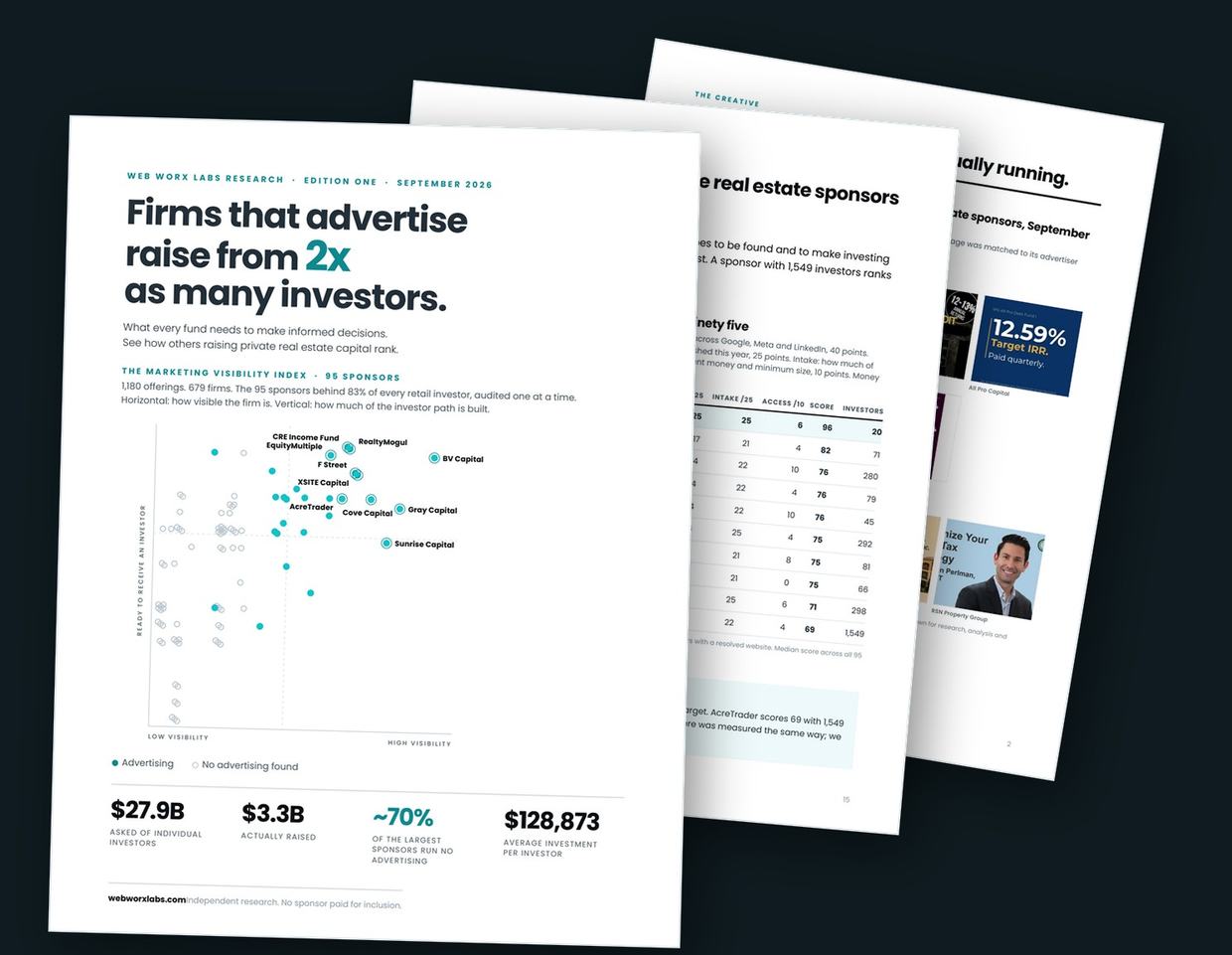
The data behind this guide, in one free report
19 pages. 14 exhibits. 679 sponsors. The ten most visible sponsors in the country, named and ranked. No sponsor paid to be in it.
On this page
- What Rule 506(c) actually allows
- 506(b) vs 506(c): which one you’re running
- Who counts as accredited
- How to verify, including the 2025 shortcut
- What 679 sponsors actually did
- Does advertising work? Where the line is
- Where the advertisers advertise
- The five most visible 506(c) sponsors
- What the best 506(c) ads say
- After the click: five things investors check
- The rules that bite
- Who can do what: marketer, broker-dealer, lawyer
- A 10-step launch checklist
- Questions sponsors ask
What Rule 506(c) actually allows
Rule 506 is the most-used exemption from SEC registration in the country. It has two doors. Rule 506(c), added under the JOBS Act, is the one with a sign on it. In plain sponsor language, it lets you:
- Advertise. Facebook, LinkedIn, Google, YouTube, podcasts, billboards, a webinar open to anyone. The SEC calls it general solicitation. You can call it marketing.
- Raise any amount. There’s no dollar cap under Rule 506. Not $5 million, not $75 million. None.
- Skip registration and the state merit review. 506 securities are “covered securities”, so states can ask for a notice filing and a fee but can’t review your deal.
- Take money only from accredited investors. Every purchaser. Not most. Every.
- Verify, not just ask. You must take “reasonable steps” to confirm each investor is accredited. A tick-box saying “I’m accredited” is self-certification. Under 506(c), on its own, it isn’t enough.
That last line is the whole trade. Under 506(c) you get the megaphone. In exchange, you check ID at the door. The full text is short and worth reading once: 17 CFR 230.506.
506(b) vs 506(c): which one you’re running
Most sponsors pick 506(b) by default because it’s what their lawyer did last time. That’s a fine reason for a $3 million raise from people you’ve had dinner with. It’s an expensive reason for anything bigger.
Exhibit 1. 506(b) and 506(c), side by side
| Rule 506(b) | Rule 506(c) | |
|---|---|---|
| Advertising and general solicitation | Not allowed. Pre-existing, substantive relationships only. | Allowed, on any channel. |
| Who can invest | Unlimited accredited, plus up to 35 non-accredited (sophisticated) investors in any 90 days. | Accredited investors only. |
| How you confirm accreditation | Reasonable belief. Self-certification questionnaire is common. | Reasonable steps to verify. Documents, a third-party letter, or the 2025 minimum-investment route. |
| Disclosure if non-accredited investors join | Required, including financial statement information. | Not applicable. |
| Cap on the raise | None. | None. |
| Form D | Due within 15 days of first sale. | Due within 15 days of first sale. |
| Who should use it | First raise, small friends-and-family round, or any deal with a non-accredited investor. | Second offering onward, raises of $10M or more, or any sponsor who has run out of people they know. |
The question isn’t which rule is better. It’s whether your next raise can be filled by people you already know. If yes, 506(b). If you’re not sure, the data later on this page should help. And one practical point: once you’ve generally solicited an offering, you’ve made your choice for that offering. You can’t un-ring the bell, so decide before the first post goes up, not after.
Who counts as accredited
The definition lives in Rule 501(a). For individuals it comes down to three tests. Meet any one.
Exhibit 2. Accredited investor tests for individuals
| Test | Threshold | What trips people up |
|---|---|---|
| Net worth | Over $1 million, alone or with a spouse or spousal equivalent. | The primary residence doesn’t count. Not the equity, and (mostly) not the mortgage. |
| Income | Over $200,000 individually, or $300,000 jointly, in each of the last two years, with the same expected this year. | Both years. One great year and one average year doesn’t qualify. |
| Professional credential | Holders in good standing of the Series 7, 65 or 82 licence. | Being “financially sophisticated” isn’t a credential. The licence is. |
Notice what’s missing: experience. A first-time investor with $1.2 million in a brokerage account qualifies. A retired fund manager with a paid-off house and a pension may not. The test is money, not judgement.
How to verify, including the 2025 shortcut
Verification is where 506(c) gets its reputation. Investors hate sending tax returns to a sponsor they met on Instagram. Fair. Here are the routes the rule itself lists as safe, followed by the newer one most sponsors haven’t caught up to.
Exhibit 3. Ways to verify accredited status under Rule 506(c)
| Method | What the investor provides | Friction |
|---|---|---|
| Income review | IRS forms reporting income for the two most recent years (W-2, 1099, K-1, Form 1040), plus a written statement they expect to qualify this year. | High. Nobody enjoys emailing a 1040. |
| Net worth review | Bank, brokerage or appraisal statements dated within three months, a credit report from a nationwide agency, and a written statement disclosing all liabilities. | High. |
| Third-party letter | Written confirmation, within the last three months, from a registered broker-dealer, SEC-registered investment adviser, licensed attorney or CPA. | Medium. Easy if the investor has an adviser who’ll sign. |
| Prior verification | Investor was verified by you within the last five years and gives a written statement they still qualify. | Low, for repeat investors. |
| Minimum investment (2025 SEC staff letter) | Invests at least $200,000 (natural person) or $1 million (entity), with written statements that they’re accredited and the minimum isn’t financed by a third party for this purpose. | Low. This is the big one. |
The March 2025 letter, in one paragraph
On March 12, 2025, SEC staff agreed that a high minimum investment can do most of the verification work. The request it answered set the minimum at $200,000 for individuals and $1 million for entities, including binding commitments to invest that amount. If the investor meets the minimum, represents in writing that they’re accredited and that the minimum isn’t financed by a third party for the purpose of the investment, and you have no actual knowledge to the contrary, staff said you could reasonably conclude you took reasonable steps to verify. Entities accredited only through their owners have extra conditions. Read the letter itself with your lawyer before you rely on it.
What it means for marketing: the friction that kept a lot of sponsors in 506(b) is gone above $200,000. The median real estate offering in our data had a $50,000 minimum. So the shortcut doesn’t cover most cheques. Yet. A sponsor running a $200,000 minimum share class next to a $50,000 one can advertise both and verify the big cheques with a signed statement.
The one-line version. Self-certification is the investor ticking a box that says “trust me”. Under 506(c), the SEC does not. Under the 2025 letter, a $200,000 cheque and a signed statement come close.
What 679 sponsors actually did
Now the part nobody else publishes. I pulled every Form D filed for an individual-investor real estate offering from July 2025 to June 2026 from the SEC’s structured Form D data: 1,180 offerings from 679 sponsors. Then I audited the 121 largest sponsors one at a time, by hand.
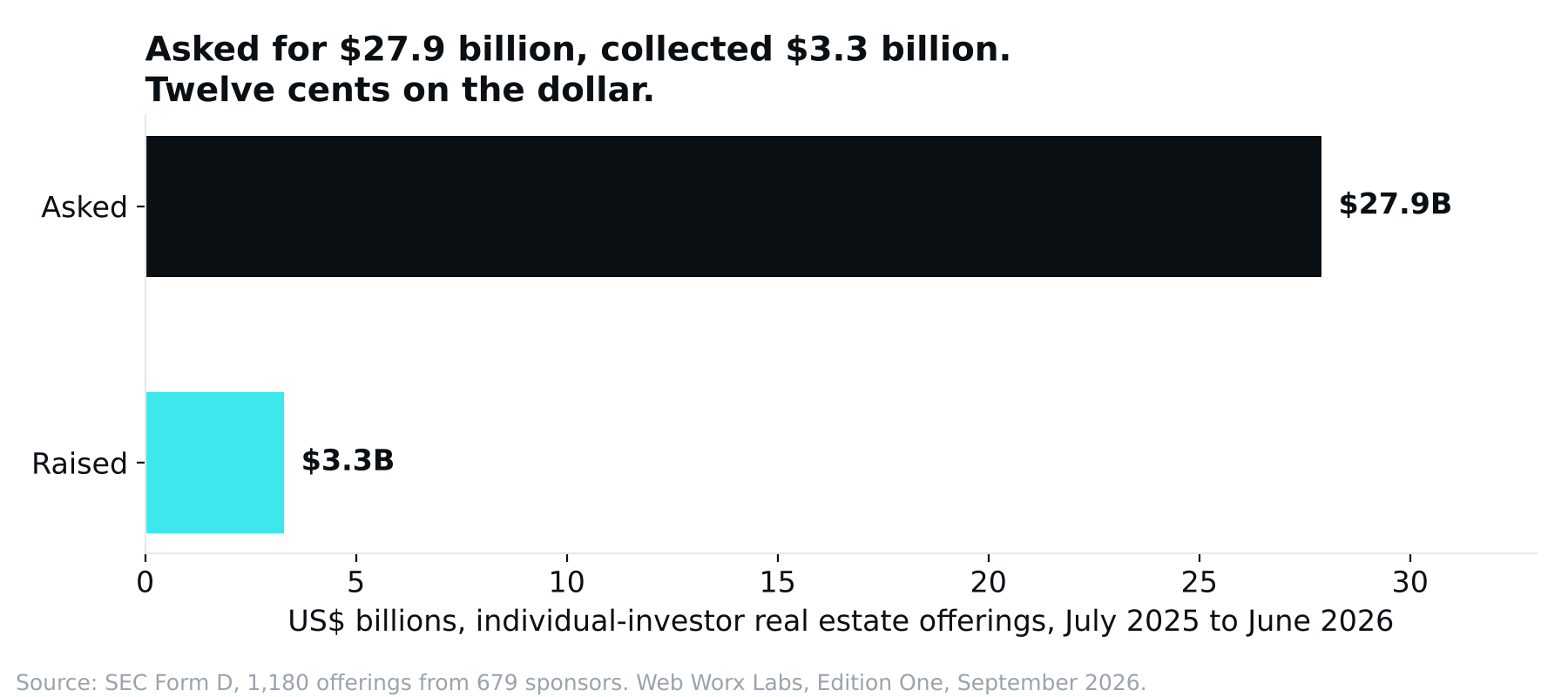
- $27.9 billion asked. $3.3 billion raised. Twelve cents on the dollar.
- Among offerings that reported a sale, the median raised $1.9 million from 13 investors. Average cheque: $128,873. Stated minimum: $50,000.
- 55 percent of offerings report nothing raised. 355 of the 679 sponsors have no investor on file at all.
- One in ten raises used 506(c). Nine in ten never opened the advertising door.
Thirteen investors is not a funnel. It’s a dinner party. The middle of this market is a sponsor phoning people he already knows, which works right up until the third deal, when the dinner party has already been invited twice.
Does advertising work? Where the line is
Of the 88 largest sponsors selling to the open market with a working website, 27 were running ads. 61 weren’t. So I compared them, holding raise size constant.
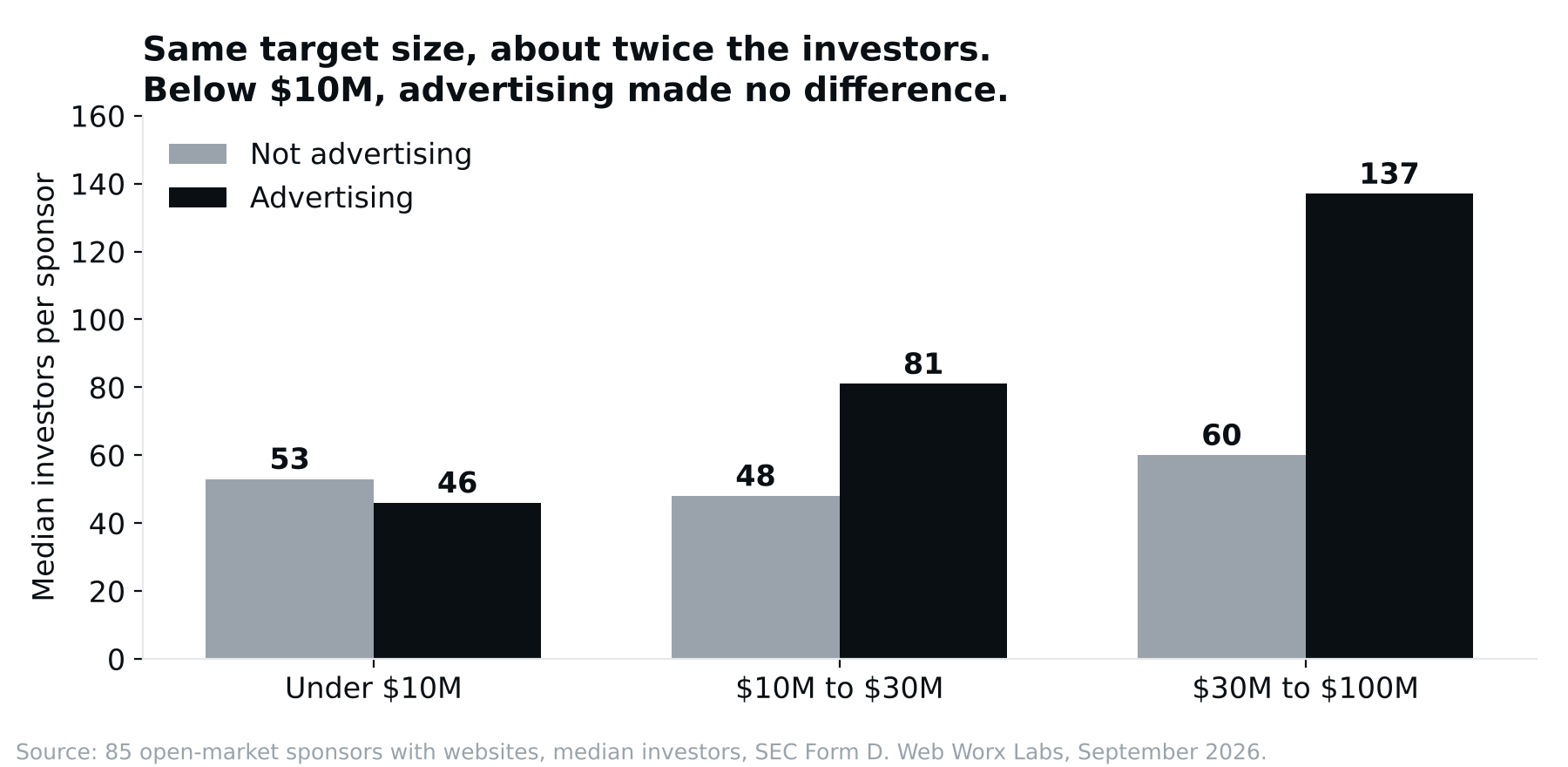
- Under a $10 million raise: no material difference. Advertisers 46 investors, non-advertisers 53.
- $10 million to $30 million: 81 against 48.
- $30 million to $100 million: 137 against 60. More than double.
Advertising didn’t change how much sponsors raised. It changed how many people they raised it from. That matters more than it sounds. Thirteen investors at $128,000 each is a raise that wobbles if two of them have a bad quarter. A hundred investors is a business.
And the honest bit: if you’re raising $4 million for one building, the data says your phone list is as good as a campaign, and cheaper. I’d rather tell you that here than after you’ve spent the budget.
How much ad budget will your raise take?
Enter your raise, average cheque and timeline. See the investors you need, the leads it takes to find them, and the budget, checked against what 1,180 real estate raises in SEC filings actually did.
Open the plannerNo email needed. Results in under a minute.At our study’s average investment of $128,873, starting with no investors from your own network. Change any number in the planner. Estimates only; real results will vary.
Planning the budget? We worked through what a $10 million raise costs in 506(c) ads, step by step, from investors needed to ad spend.
Where the advertisers advertise
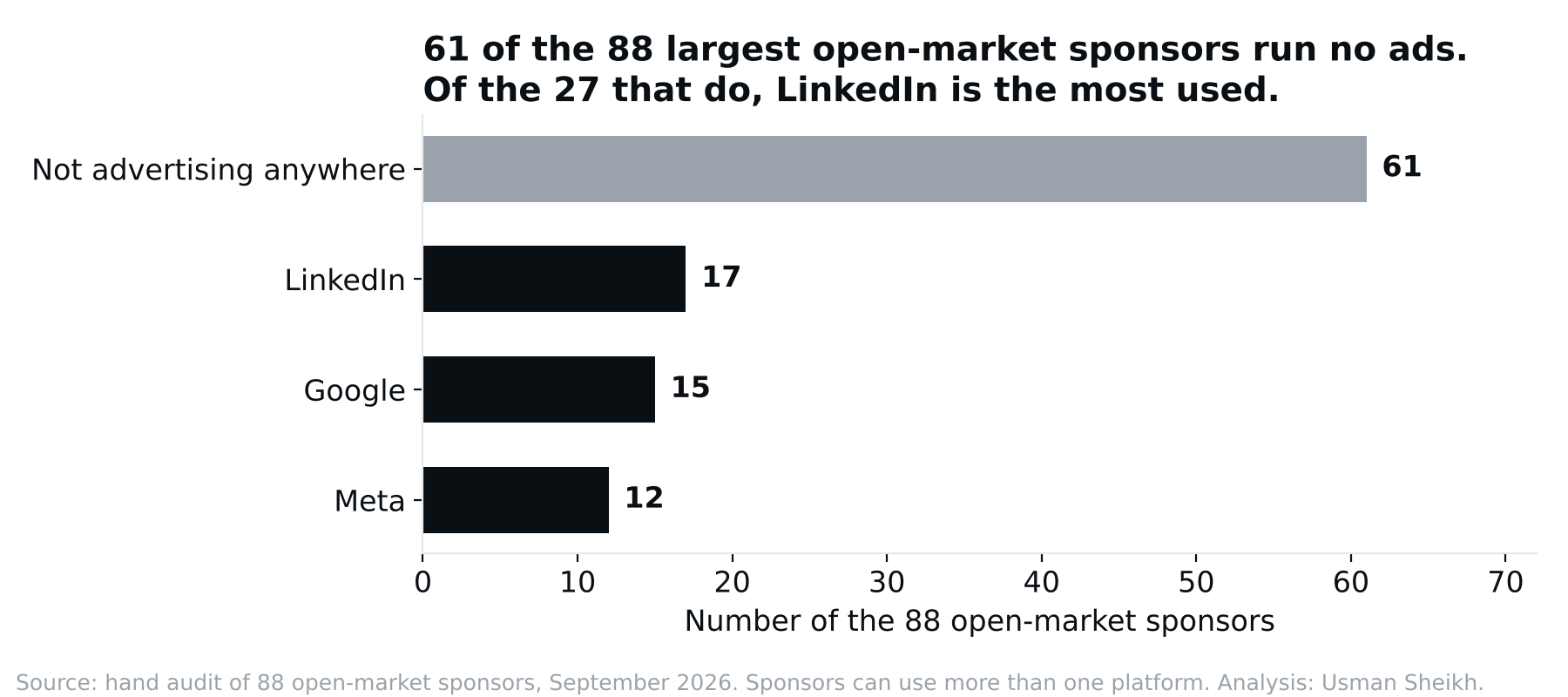
- LinkedIn leads (17 sponsors), then Google (15), then Meta (12).
- Fourteen of the 27 advertisers use one platform only. Four use all three.
- Volume is not reach. One self-storage sponsor had about 500 Google ads live and 41 investors. Another ran seven Google ads and five LinkedIn ads, had every intake feature built, and had 298. Seventy times the Google ads. One seventh of the investors.
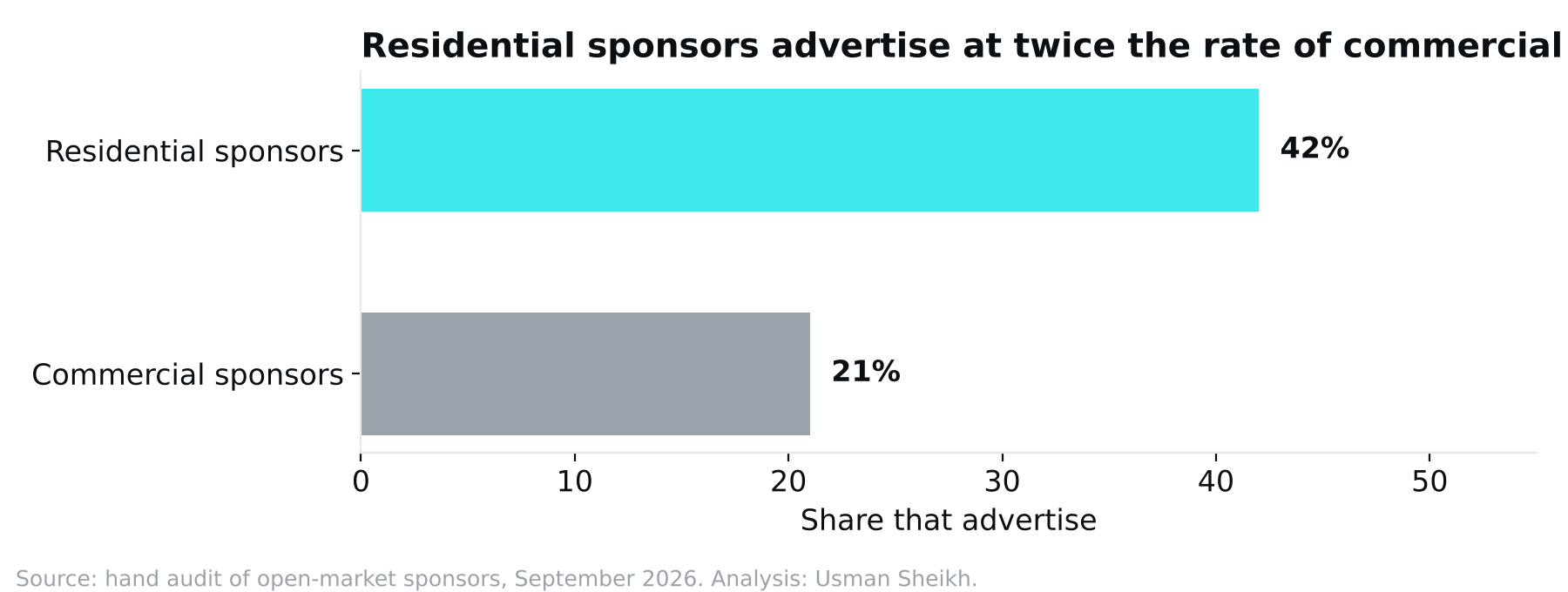
Residential sponsors advertise at twice the rate of commercial ones. An apartment building is easy to picture in a six-second scroll. A sale-leaseback on a cold-storage portfolio needs a webinar. Pick the channel for the explanation your asset needs, not for where your competitor is.
The five most visible 506(c) sponsors in the country
I scored all 95 sponsors with a working website on four things: reach (are they advertising, and where), publishing (do they keep talking to the undecided), intake (the five features below) and access (can an investor actually get in). The median score is 35 out of 100. Here are the top five.
Exhibit 8. Marketing Visibility Index, top five of 95 sponsors
| Rank | Sponsor | Score /100 | Investors, 12 months | What their ads lead with |
|---|---|---|---|---|
| 1 | BV Capital | 96 | 20 | The deal: asset, target return, close date, risk line |
| 2 | Gray Capital | 82 | 71 | Yield and brand |
| 3 | CRE Income Fund | 76 | 280 | Yield |
| 4 | Cove Capital Investments | 76 | 79 | Brand |
| 5 | RealtyMogul | 76 | 45 | Specific deals |
| 6 to 10 | Named and scored in the free report, including the sponsor with the most investors in the country and the lowest score in the top ten. | |||
Read the investor column before the score. The number one sponsor has 20 investors, because visibility is a leading indicator, not a result. A high score says the system is built. It doesn’t say the raise is done.
Case study
Our founder built and ran this system in-house at a $1.7 billion real estate manager
Paid reach on more than one platform. A landing page compliance had signed. An accreditation step. A webinar. A follow-up sequence. The same pieces this page has been describing, run as one system.
What the best 506(c) ads say
The live ads in the audit fall into five themes: yield-led, tax-led, brand, founder-led and deal-specific. The top-scored sponsor in the country, BV Capital, runs deal-specific ads. Across them you’ll find the same five things:
- The asset. What it is and where. Not “a value-add opportunity”.
- The target return, labelled as a target, with the basis available on the landing page.
- The hold. Investors want to know when they get their money back before they want to know anything else.
- The close date. Urgency that happens to be true.
- A risk line. Short and plain. It costs you nothing in clicks and buys you a lot with compliance.
Exhibit 9. Live 506(c) ads from the most visible sponsors, October 2026
These are real ads, running now, pulled from LinkedIn’s public Ad Library. Anyone can look them up. Two from the top-ranked sponsor first, then three other ways sponsors pitch the same investor.

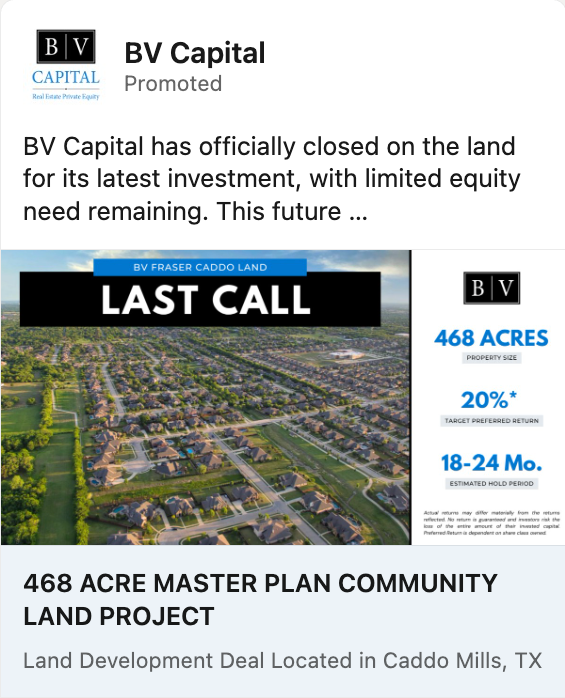
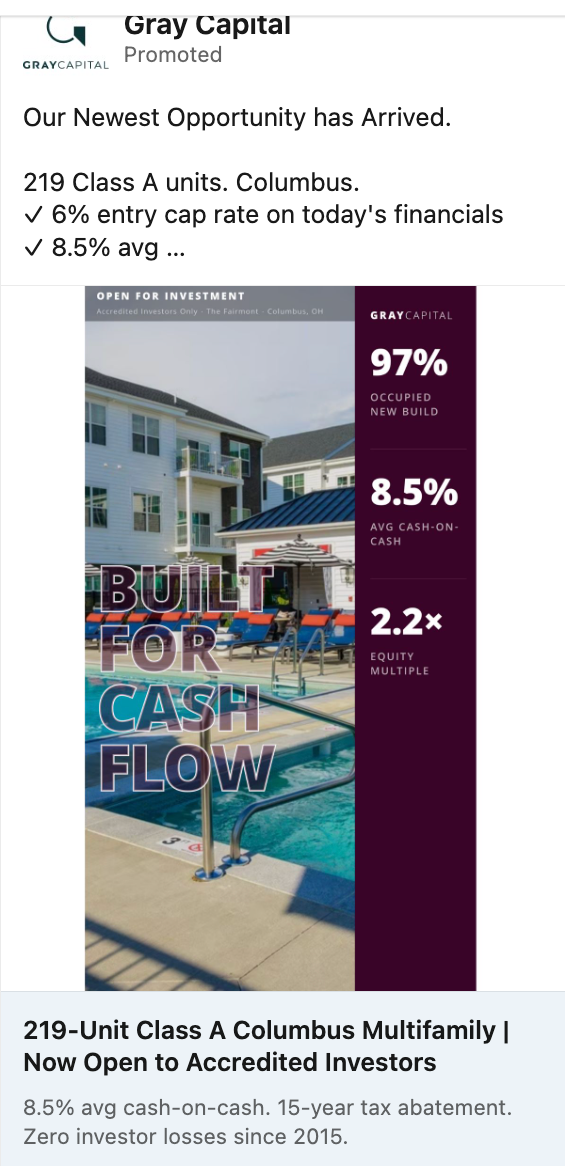
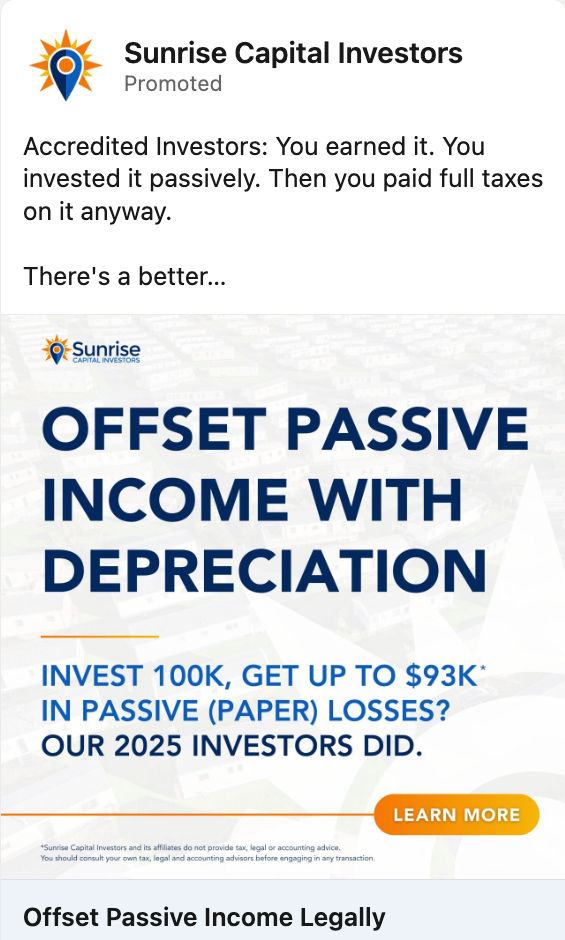
Exhibit 9. Source: LinkedIn Ad Library, captured October 15, 2026. Figures in the ads are the sponsors’ own claims, shown as published. Inclusion is not an endorsement of any offering.
Compliance will have opinions about every one of these. Let them. Anti-fraud rules apply to every word of a 506(c) ad, so a target with no basis, or a “safe” anywhere near real estate, is a problem you bought yourself. In my experience the version compliance signs off outperforms the first draft anyway. I’ve never admitted that to a compliance officer, and I’d appreciate it if you didn’t either.
After the click: five things investors check
The ad is the smallest part of the system. Before an accredited investor enquires, they check five things on your site:
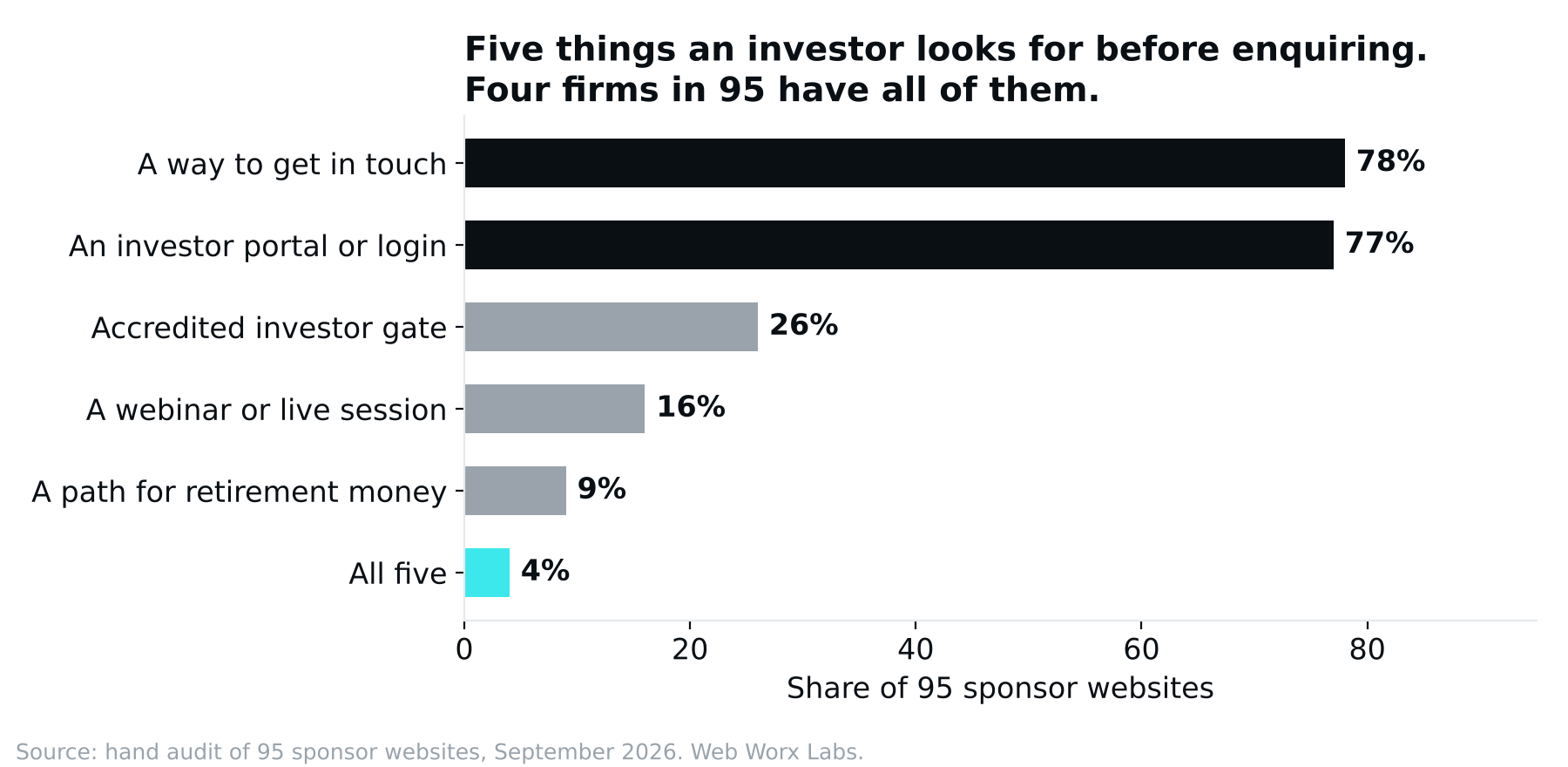
- A way to reach a person (78 percent have one).
- An investor portal (77 percent). It tells them you’ve done this before.
- An accreditation step (26 percent). Under 506(c) you need one anyway. Put it where the investor can see it.
- A webinar (16 percent). People hand over $100,000 to a voice, not a PDF.
- A path for retirement money (9 percent). For a lot of accredited investors, that’s where the money is.
Four sponsors out of 95 have all five. None of them cost real money. The webinar is a Zoom link. The IRA path is a conversation with a custodian. A sponsor spending $20,000 a month on ads that land on a page with two of the five is paying full price for a fraction of the result.
The rules that bite
506(c) doesn’t loosen anything except the advertising ban. Everything else still applies, and a few of them catch sponsors every year.
Exhibit 11. Compliance obligations that still apply under 506(c)
| Rule | What it means | Where sponsors slip |
|---|---|---|
| Form D | File with the SEC within 15 days after the first sale. | Filing late, or forgetting the annual amendment on a continuing offering. |
| State notice filings | Most states require a notice filing and fee where your investors live, usually through NASAA’s Electronic Filing Depository. | Advertising nationally, then discovering a New York investor and no New York filing. |
| Bad actor disqualification, Rule 506(d) | Certain past violations by the issuer, its officers, promoters or paid solicitors disqualify the offering. | Not checking the paid placement agent or a new co-GP. |
| Anti-fraud | Every ad, post, deck and webinar must be accurate and not misleading. | Return targets with no basis. Cherry-picked track records. The word “guaranteed”. |
| Restricted securities | Investors can’t freely resell. Say so. | Ads that imply liquidity. |
| Paying people to raise | Transaction-based compensation is a hallmark of broker activity and generally requires registration. | “Finder” fees paid as a percentage of capital raised. |
Who can do what: marketer, broker-dealer, lawyer
The question that matters as much as the ads: who do you hire, and what can each of them legally do?
Exhibit 12. Roles in a 506(c) raise
| Role | What they do | How they’re paid | Who owns the investor list |
|---|---|---|---|
| Marketing firm | Strategy, creative, media buying, landing pages, webinar, CRM, follow-up. Works with your counsel on every asset. | Fixed fee or retainer. Never a percentage of capital raised. | You. |
| Broker-dealer or placement agent | FINRA-registered. Can recommend the investment and be paid on what it raises. | Commission on capital raised. | Often the broker-dealer. |
| Unregistered “capital raiser” | Introduces investors for a cut. | Percentage of capital raised. | Unclear, and so is the legality. See Exhibit 11. |
| Securities lawyer | Offering documents, Form D, state filings, ad review. | Hourly or fixed. | Not applicable. |
| Verification provider | Reviews investor documents and issues third-party letters. | Per investor. | You. |
The trade is simple. A broker-dealer brings investors and keeps the relationship. Marketing builds you a list you own, which is worth more on the second offering than the first. That is how we run private capital marketing for sponsors.
A 10-step launch checklist
- Decide 506(b) or 506(c) before anything goes public. In writing, with counsel.
- Check the size. Under $10 million, first raise? The data says call your list first.
- Pick your verification route. Third-party letter, document review, or a $200,000 minimum under the 2025 letter.
- Run bad actor checks on everyone covered, including anyone paid to solicit.
- Build the five intake features. Contact, portal, accreditation step, webinar, retirement-money path.
- Write the ad from the five-part pattern. Asset, target, hold, close date, risk line.
- Send every asset through compliance. Ads, landing pages, emails, webinar slides. Keep the approvals.
- Launch on two platforms, not one. The sponsors with the most investors were on two or three, not one.
- Keep publishing after the click. 12 of the 27 advertisers kept talking to the undecided. 15 went silent.
- File Form D within 15 days of the first sale, and the state notices where your investors live.
Guides for each part of the raise
- How to find investors for real estate: where your next investors come from once friends and family are invested
- How to raise capital for real estate: the raise as a marketing plan, from the deal story to follow-up
- 506(b) vs 506(c): what each rule lets you say about your raise, and where you can say it
- Real estate syndication marketing: how sponsors fill a raise, from the investor package to the investor call
- Marketing a real estate fund: what changes when investors back you, not a building
- What investors look for on a real estate investment website: what our audit of 95 sponsor websites found
Questions sponsors ask
What is a 506(c) offering?
A private securities offering under Rule 506(c) of Regulation D. It lets the issuer advertise to the public, with no cap on the amount raised, provided every investor is accredited and the issuer takes reasonable steps to verify that status.
What’s the difference between 506(b) and 506(c)?
506(b) bans general solicitation, allows up to 35 non-accredited but sophisticated investors, and accepts a reasonable belief of accredited status. 506(c) allows advertising, accepts only accredited investors, and requires verification.
Can non-accredited investors invest in a 506(c) offering?
No. Every purchaser in a 506(c) offering must be accredited. If you need non-accredited investors, look at 506(b), Regulation Crowdfunding or Regulation A.
How do you verify an accredited investor?
Review two years of IRS income forms, or recent asset statements plus a credit report, or get a written letter from a registered broker-dealer, SEC-registered adviser, licensed attorney or CPA. Since March 2025, SEC staff also accept a minimum investment of $200,000 for individuals or $1 million for entities, with written representations.
Is there a limit on how much I can raise under 506(c)?
No. Rule 506 has no dollar cap.
Can I advertise a 506(c) offering on social media?
Yes. That’s what 506(c) is for. LinkedIn, Google and Meta were the most used platforms in our audit of the largest sponsors. Every ad is subject to anti-fraud rules, so treat each one as an offering document.
Do I need a broker-dealer to run a 506(c) raise?
Not to advertise. Your own team can generally sell your own offering if they aren’t paid based on what they sell. Anyone paid a percentage of capital raised is a different matter and generally needs to be registered. Ask your securities counsel.
When is Form D due?
Within 15 calendar days after the first sale, which is generally when the first investor is irrevocably committed. Most states also require a notice filing.
Does advertising actually help a 506(c) raise?
In 679 sponsors’ filings, not below a $10 million raise. Above it, advertisers reached roughly twice the investors of non-advertisers for the same size of raise: 81 against 48 at $10 million to $30 million, and 137 against 60 at $30 million to $100 million.
How many sponsors use 506(c)?
About one in ten US real estate raises from individual investors in the twelve months to June 2026, based on SEC Form D data.
Published research · SSRN working paper
Every number on this page is in a published working paper
The data here comes from a working paper published on SSRN, the open research library used by economists, finance researchers and law schools. It sets out the full method, every table, and what the data can and can’t show, so you can check any claim on this page against the source.
Who Advertises Under Rule 506(c), and Does It Help? Evidence from the Form D Filings of 679 U.S. Real Estate Sponsors, 2025 to 2026
Usman Sheikh, CPA · Web Worx Labs · October 2026
DOI 10.2139/ssrn.7616861 · 9 pages · Open access, CC BY 4.0
How to cite this research
Sheikh, Usman. “Who Advertises Under Rule 506(c), and Does It Help? Evidence from the Form D Filings of 679 U.S. Real Estate Sponsors, 2025 to 2026.” Working paper, SSRN, October 15, 2026. https://doi.org/10.2139/ssrn.7616861
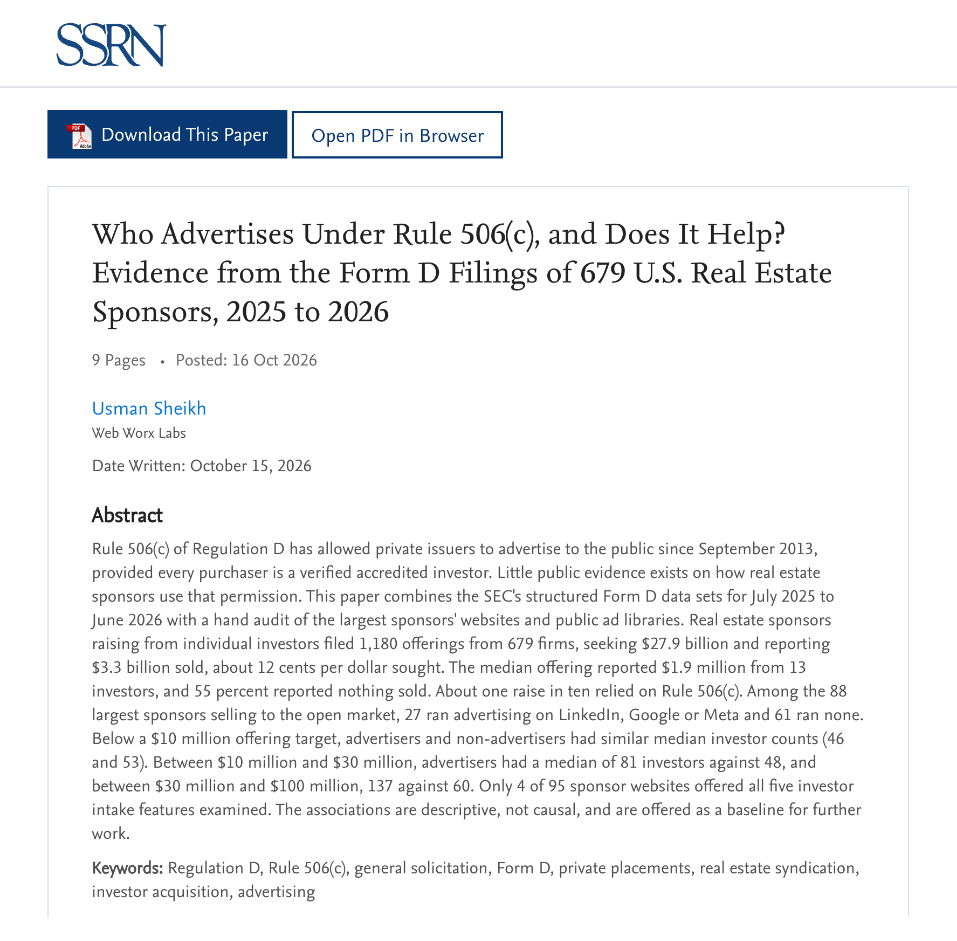
The paper’s abstract page on SSRN.
Raising in the next six months?
Tell us the raise size, the asset and the close date. We’ll show you where you sit against the 95 sponsors in our audit, and the first thing we’d fix. Fifteen minutes. No deck.
Tell us what you’re raising
One team for the whole raise: the investor website, the ads, the video and design, and the follow-up that turns interest into calls. Send us the raise size, asset and close date, and we’ll reply within one business day with where you sit against the 95 sponsors in our audit.
Share this with a sponsor who is raising.
About the author
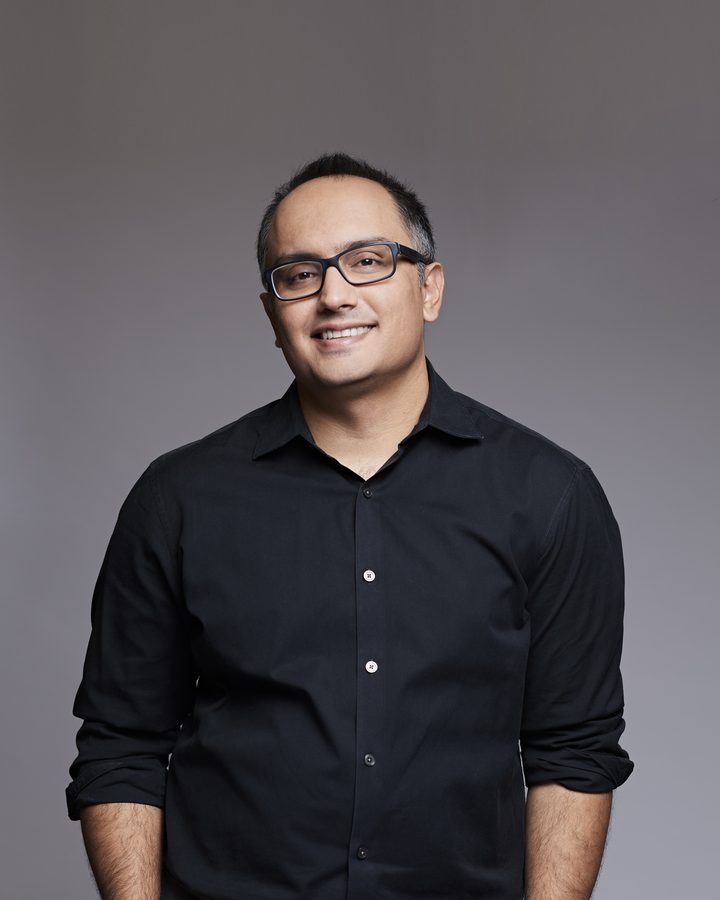
Usman Sheikh, CPA is the founder of Web Worx Labs, a growth marketing firm for regulated industries, with published case studies across private capital, insurance, mortgage and pharma. He spent a couple of years as Senior Director of Performance and Growth at a $1.7 billion private real estate investment manager operating in Canada and the US, where he ran investor acquisition across retail and wholesale channels, with the US raise under Rule 506(c) and a compliance officer reviewing every asset before it ran. At peak the program produced 2,500 qualified investor leads a month and average deal size rose 45 percent. Before that: twenty years across financial planning and analysis, agency ownership and marketing leadership in retail, energy, pharma, financial services and private equity, including time at Saudi Aramco. He holds CPA designations in Canada and the United States and is certified in Google Ads and Google Analytics.
How this guide was built: the rules section draws only on primary sources: the text of Regulation D, SEC staff guidance and the March 2025 no-action letter, each linked where it is used. The market data comes from the author’s own pull of the SEC Form D structured data sets and his hand audit of the 121 largest sponsors in September 2026. The opinions are his, from running investor acquisition on a 506(c) raise with a compliance officer on every draft. Corrections: contact us.
LinkedIn · About Web Worx Labs · The US Private Placement Benchmark, Edition One · Updated October 15, 2026
Last updated October 15, 2026. This guide is general information for sponsors, not legal or investment advice. Rules and staff guidance change; confirm anything you rely on with your securities counsel.

Usman Sheikh, CPA, is the founder of Web Worx Labs. Qualified as a CPA in Canada and the United States, with twenty years across financial planning and analysis, agency ownership and marketing leadership. Previously Senior Director of Performance and Growth at a $1.7 billion private real estate investment manager in Canada and the US, running investor acquisition across the retail and wholesale channels. Earlier, oil and gas at Saudi Aramco, and campaigns across pharmaceutical, insurance, retail and industrial manufacturing.
Keep reading
 Real Estate Investment Website: What Investors Look ForBefore they call, they look you up.
 What It Costs to Raise $10 Million With 506(c) AdsWhat a $10 million raise really costs in ads
 Marketing a Real Estate Fund: Investors Back You, Not a BuildingIn a fund, investors back you, not a building.
 Real Estate Syndication Marketing: How Sponsors Fill a RaiseIt starts with a building you can't buy alone.
 506(b) vs 506(c): Can You Advertise Your Next Raise?One meeting with your lawyer shapes the whole raise.
 How to Raise Capital for Real Estate: A Sponsor’s Marketing PlanMost capital is raised before anyone asks.
 How to Find Investors for Real Estate SyndicationsWhere new investors come from after family and friends.
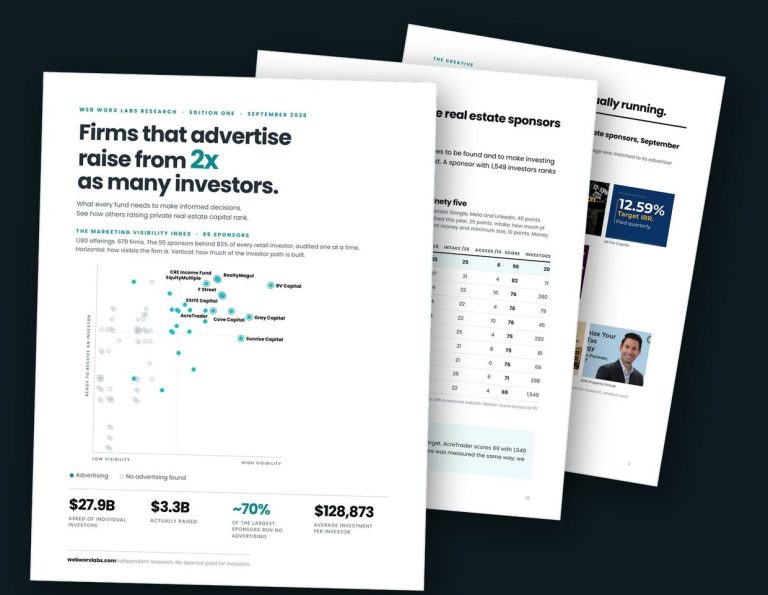 Sponsors asked investors for $27.9 billion last year. They collected $3.3 billion.1,180 real estate raises, 679 sponsors, one year of SEC filings. Seven in ten of the biggest sponsors run no advertising, and...